Interest rate hike forecast: July hold, September hike?
Markets swing back to wait-and-see for October
With the July FOMC rate decision just days away, prediction markets are getting clearer.
As of July 24, Polymarket's "Fed Decision in July?" market showed:
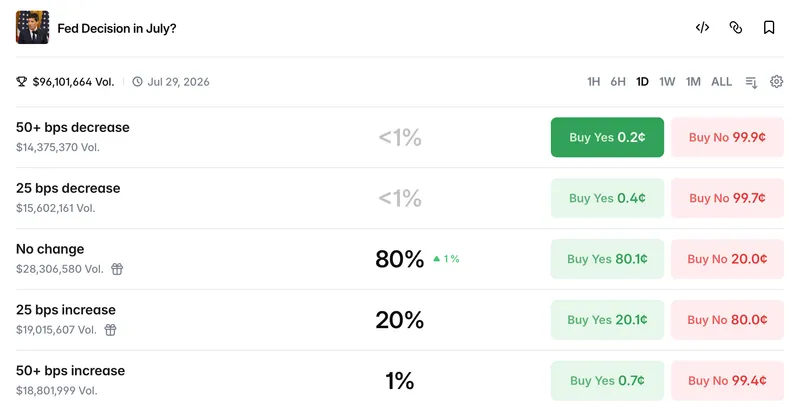
Hold rates: 80%
Hike 25 bps: 20%
Hike 50 bps: 1%
If you think rates stay flat in July, predicting "No change" now still leaves roughly 20% of potential upside on the table.
But July isn't the interesting part. Look further out and the prediction market gives a more revealing signal:
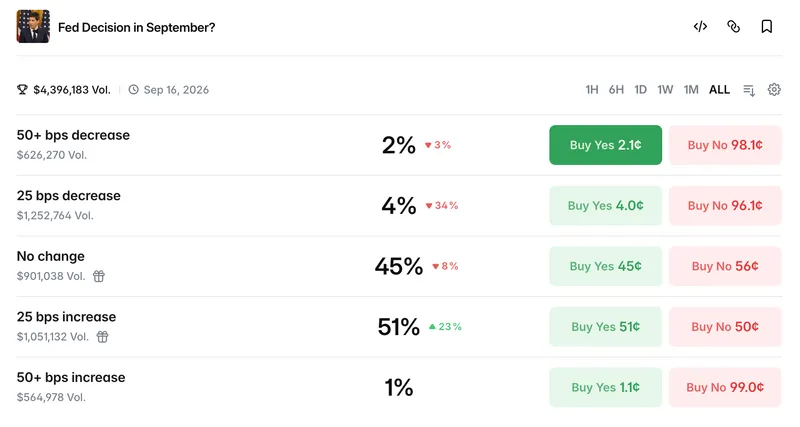
By September, the odds of a 25-bps hike rise to 51%, with hold at just 45%. Then in October, the market flips back – 60% for hold, above 36% for a 25-bps hike.
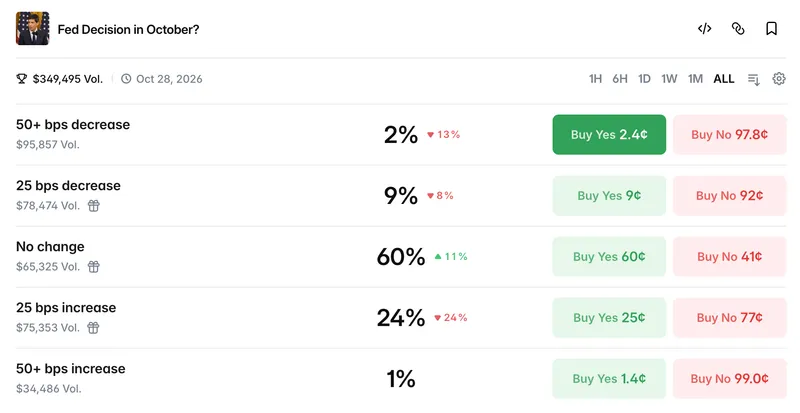
These three numbers don't contradict each other. The market may be betting on a full path: watch in July, hike once in September, then pause and assess in October.
Why July likely holds
The reasoning is simple. With the meeting so close and no advance policy signals, a sudden move from the Fed is unlikely.
But a pause isn't a pivot to easing. Several inflation pressures are hard to ignore right now: rebounding energy prices, a new round of tariffs that could raise import costs, a still-resilient US labor market, and long-end Treasury yields holding high. None of that gives the Fed a reason to declare victory. July looks more like waiting for more data while leaving the real decision for September.
Why the market pushes the hike to September
Because by then, the Fed will have more data. The next two months bring two CPI reports, two non-farm payrolls prints, and more data on consumption, wages, and business costs.
If inflation picks back up while employment stays firm, the case for a September hike gets much stronger than it is today.
One caveat: the September hike probability is only 51% – a slight edge, not a consensus. Trading volume in the September market is also notably lower than July's, which means a single important data release could shift the odds fast.
Why October swings back to hold
This isn't the market contradicting itself. It's the opposite: it suggests that if the Fed does hike in September, it likely won't move again immediately. Instead, it'll watch how that hike affects the economy and inflation.
That's been the Fed's most common rhythm in recent years: act, then observe. So October's high "hold" probability actually validates the earlier read rather than overturning it.
The balance sheet gives room to wait
The Fed's H.4.1 report, released July 23, offers another angle.
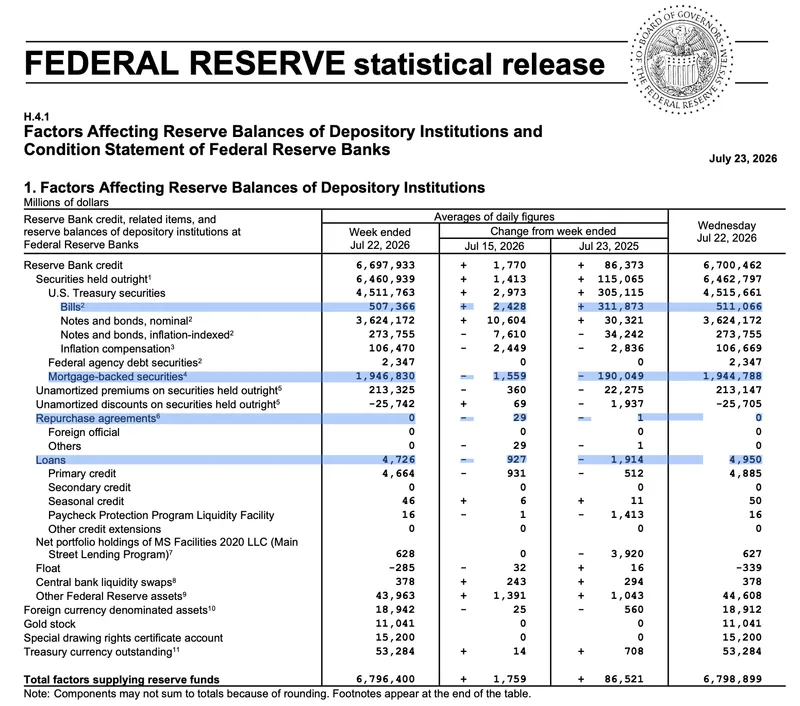
It shows the Fed still adding short-term debt, continuing to reduce MBS holdings, with reverse repo balances near zero. There's no emergency liquidity pressure in the financial system – another point supporting a July pause.
Which path makes more sense?
The market currently leans toward "pause in July, hike in September, wait in October." If inflation cools, the Fed could pause repeatedly. Only if prices clearly run out of control would back-to-back hikes become the base case.
The real debate: will September bring a hike, and is one hike enough? You can check live probabilities in Bitget Wallet's prediction market and take the side you believe in.