Memory stocks surge: MU, SNDK, INTC
NVDA consolidates, capital rotates into infrastructure
Everyone was watching Nvidia. But the real move happened elsewhere.
While Nvidia slipped about 1% and entered a consolidation phase, three stocks in the semiconductor supply chain had a very different day. Micron (MU) jumped 11%, SanDisk (SNDK) surged 12%, and Intel (INTC) posted a stunning 12.9% single-day gain. This isn't a technical bounce but a systemic rotation of capital from the most obvious AI trade into the infrastructure underneath it.
Three stocks on the rise
Micron Technology (MU)
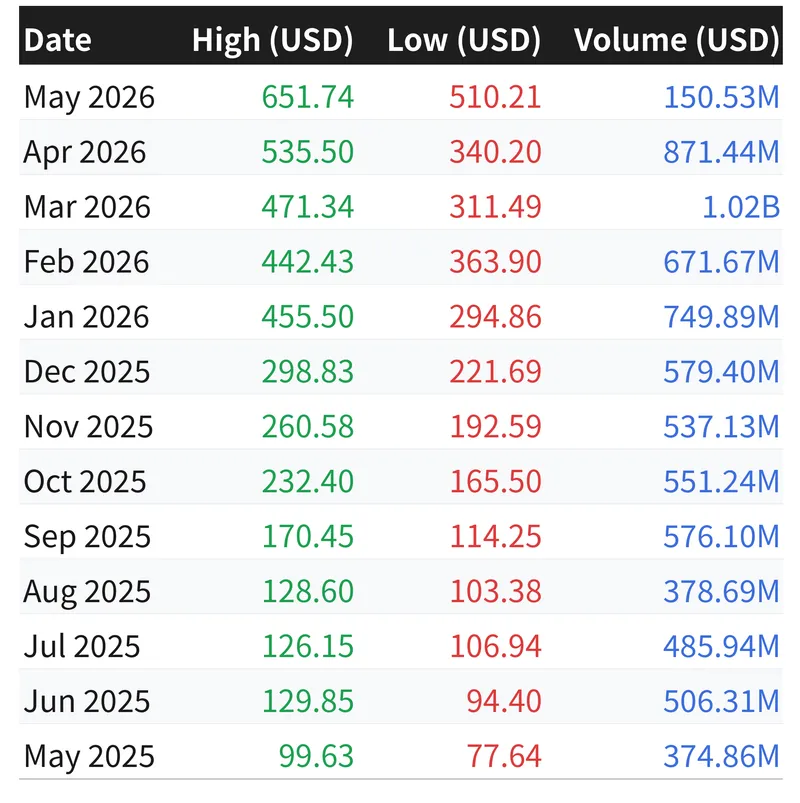
Over the past year, Micron has undergone a fundamental rerating. It began 2025 still absorbing the hangover from weak consumer electronics demand. Then its high bandwidth memory (HBM) products broke into NVIDIA's supply chain, triggering explosive revenue and margin expansion. The market's pricing logic shifted entirely – Micron is now firmly in the same tier as SK Hynix and Samsung as a global memory leader.
Micron's 1-year price history
SanDisk (SNDK)
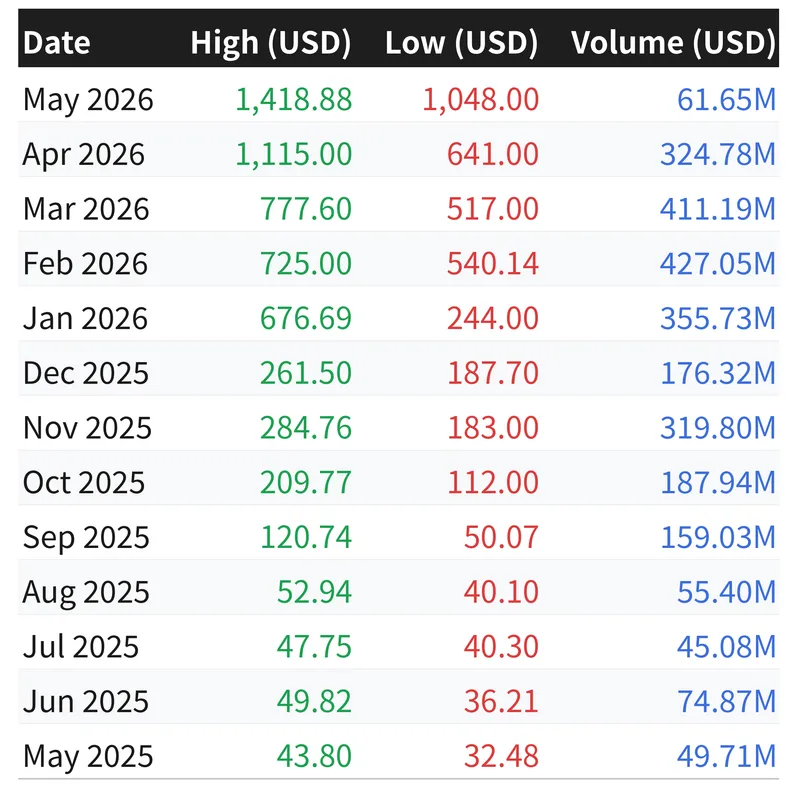
SanDisk has risen 31x over the past year – a classic turnaround story. The global NAND market recovery, combined with cloud providers restarting high-capacity SSD procurement, pulled the company out of loss-making territory and significantly repaired its income statement. The independent spinoff created a value discovery moment that, layered on top of the industry upcycle, produced one of the steepest recovery curves in the sector.
SanDisk's 1-year price history
Intel (INTC)
Intel's surge was driven by foundry expectations, not earnings. Market speculation around Intel Foundry winning major external clients – Apple or Nvidia among the names circulating – combined with Intel's deeply compressed valuation triggered a short squeeze. It was a bet on a transformation story, not a confirmation of one.
Why memory stocks are surging
The AI bottleneck has shifted from compute to memory
As large model parameter counts grow exponentially, the constraint in AI training and inference has moved from raw GPU power to memory bandwidth. HBM – produced by Micron, SK Hynix, and Samsung – has become the most strategically scarce component in data center buildouts. The pricing and volume dynamics are both moving in one direction.
NAND and DRAM are in a cyclical recovery
After a long inventory correction and disciplined production cuts by major manufacturers, contract prices for standard memory chips have climbed steadily over recent quarters. Demand from AI smartphones, AI PCs, and enterprise SSDs is adding fuel – and companies like SanDisk, with heavy NAND exposure, are seeing margin recovery at scale.
Institutional capital is rotating out of the leaders
After enormous gains in Nvidia and the GPU names, funds are looking for the next leg. Capital is moving toward stocks that have just crossed a profitability inflection point, carry lower valuations, or have a restructuring catalyst – Intel's foundry pivot and SanDisk's spin-off both fit that profile.
AI memory stocks on the rise
Micron's HBM capacity is full. SanDisk is being repriced as a standalone company. Intel is making a last stand in advanced foundry.
All three are sending the same signal: the AI hardware investment thesis has expanded beyond GPU dominance into full system-level bottleneck plays. Memory is the biggest bottleneck right now – and the biggest opportunity.