Nvidia's GTC 2026 keynote
Nvidia moves from chip maker to AI infrastructure architect
On June 1, 2026, Nvidia founder and CEO Jensen Huang took the stage at GTC Taipei and delivered what may be the most consequential tech keynote of the year.
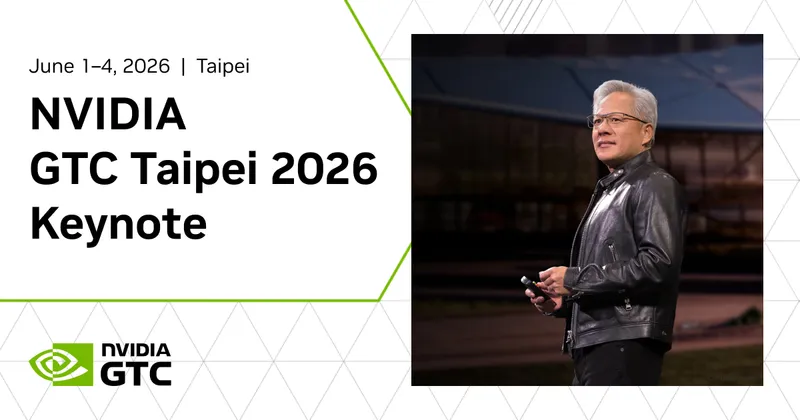
If the old Nvidia was a hardware company that made GPUs, this keynote announced something different: Nvidia is now positioning itself as the architect of AI infrastructure for the entire world.
Nvidia's upcoming product launches
Jensen Huang unveiled a full portfolio spanning PCs, cloud, and robotics in a single presentation:
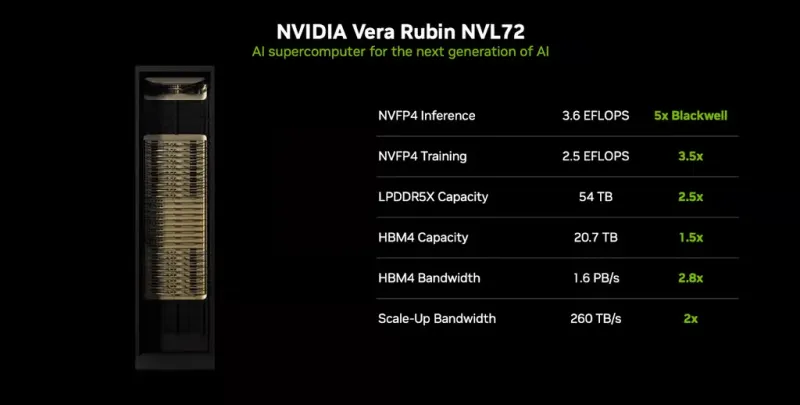
Vera Rubin AI system: Nvidia's most ambitious AI cluster system ever announced has entered full mass production, alongside the new Vera CPU.
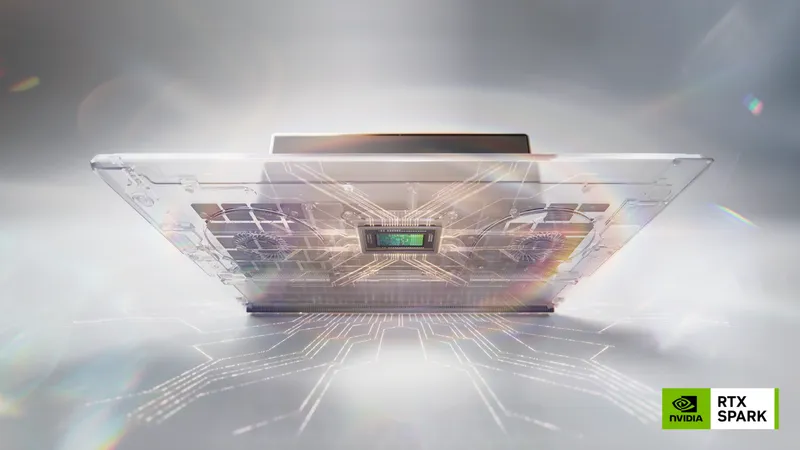
RTX Spark super chip: Designed specifically for Windows PCs, marking Nvidia's formal entry into the PC chip market. Dell, Lenovo, and others will ship the first AI PCs featuring this chip this fall.
Nemotron 3 Ultra open-source AI model: Expanding Nvidia's software ecosystem.
DSX platform: A digital simulator built specifically for designing and validating AI factories before construction begins.
Alpamayo 2 inference model: Targeted at robotaxi and autonomous vehicle applications.
Isaac GROOT platform: An advanced development platform for humanoid robots.
Huang's take: What comes next in the industry
Here are the four big bets Jensen Huang laid out at GTC.
1. Agentic AI is the next wave
"The next wave of AI is shifting from generative AI to agentic AI." Future AI won't just answer questions – it will understand intent and autonomously complete complex, multi-step tasks, such as generating a full animation or CAD design from a single instruction.
2. Tokens are assets
On the business model side, Huang made a striking argument: tokens have become the core revenue unit for AI companies. That asset-like quality is driving what he described as "rocket-speed" demand for AI compute globally.
3. AI creates jobs, not destroys them
Huang pushed back directly on fears about AI displacing workers: "complete nonsense." He cited GitHub data showing AI-assisted coding usage jumped from 300 million uses in 2023 to 1.4 billion in the first months of 2026 – while the total number of software engineers worldwide went up, not down.
4. AI factories will define the next era of infrastructure
The compute infrastructure of the future will be AI factories – capital-intensive at a scale that is hard to grasp. Huang disclosed that a 1GW-class AI factory starts at $20 to $30 billion, with future facilities potentially reaching $80 to $100 billion. The DSX platform is Nvidia's answer to this: a digital twin environment where customers can design and validate an AI factory before breaking ground.
Where Nvidia actually is at now
Huang closed with a clear statement of where Nvidia stands: "Nvidia has indeed become an infrastructure company."
The goal is to help global customers build the AI infrastructure that generates the most revenue and profit – and to extend agentic AI into every device that has power: PCs, humanoid robots, satellites, cloud base stations. This fall, as AI PCs hit the market, that vision lands on every desk.