Neobanks and financial power shifts
Your only global financial account might be a wallet
Banks aren't disappearing. They're being unbundled.
Look back over nearly 20 years of financial innovation and a pattern emerges. Digital banks, payment platforms, stablecoins, and today's fast-growing onchain wallets were never really building new banks. They were pulling apart the financial power that traditional banks had monopolized for so long.
For most of the last century, commercial banks sat at the center of modern finance because they held four key capabilities at once: accounts, payments, money, and settlement. The 2008 financial crisis started to loosen that grip, and the highly concentrated model of banking began to come apart.
Four stages of a power shift
Over the past 18 years, this migration of financial power has moved through roughly four stages.
First-generation neobanks like Revolut and Nubank moved financial power away from the banking license and toward the user-facing entry point.
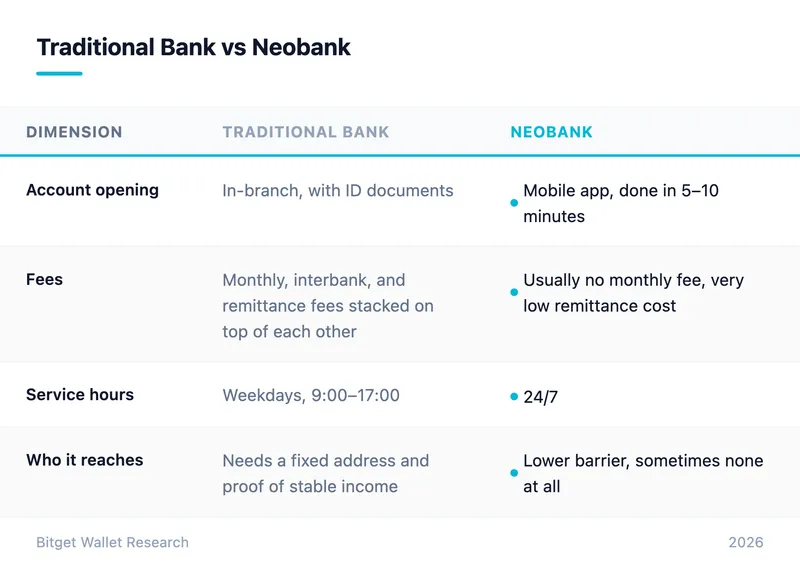
Second-generation payment infrastructure like Wise peeled the payment and settlement network away from the banking system.
Third-generation stablecoin finance proved that the dollar itself can exist without banks or traditional payment rails.
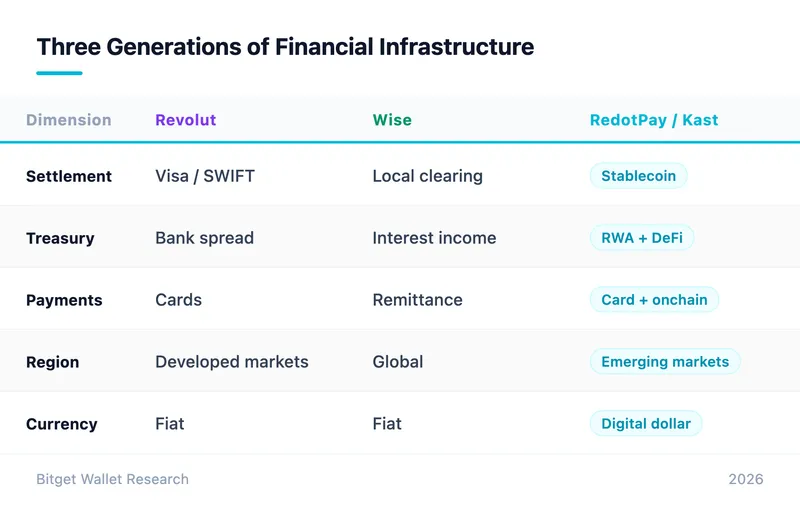
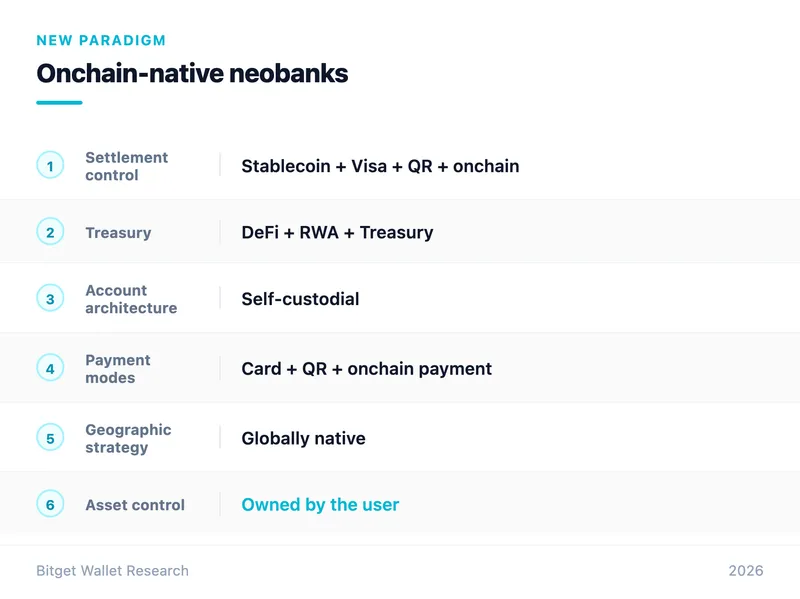
And today, onchain-native neobanks, led by onchain wallets, are attempting the final step: returning accounts, assets, and financial control to the people who own them.
Not a history of digital banking
The story of neobanks was never just the story of banks going digital; it was the story of financial power migrating, piece by piece.
As accounts, payments, money, and settlement pull apart from one another, a new question comes into focus: in the future, what will each person's single global financial account actually be?
The answer may no longer be a bank. It may be a wallet.