


What Is Privacy Coins: A Beginner Guide to Anonymous and Secure Crypto Transactions
Privacy coins are a class of cryptocurrencies that utilize increased sophistication in cryptography to keep sensitive information about a transaction private. They hide wallet addresses, sender identity, and the amount being transacted. This makes the transfer anonymous but verifiable on-chain. These are digital coins using cryptographic proof for concealing the sender and receiver's identities from the very beginning until the end. They are considered safer and private regarding transaction processing compared to traditional digital assets.
Privately focused cryptocurrencies have gained fresh attention in 2025 due to increasing demand for stronger data protection and increased financial independence by users. Projects such as Monero (XMR), Zcash (ZEC), and Dash (DASH) are proof that blockchains can maintain their transparency while still preserving anonymity. Bitget Wallet allows users to store, trade, and manage their privacy coins securely across a variety of networks, combining high-level security and compliance with personal control.
Own your Web3 journey easily with Bitget Wallet – secure, fast, and beginner-ready.
What Are Privacy Coins and Why Are They Surging in November 2025?
Privacy coins are a class of digital asset purpose-built to render crypto transactions as private and traceless as cash.
Most importantly, unlike other traditional cryptocurrencies that log every transfer on a public ledger, the privacy coins utilize advanced cryptographic techniques to cloak sender and receiver information, wallet addresses, and transaction amounts-a concept Chainalysis likens to the cash-like anonymity of blockchain finance.
While Bitcoin and Ethereum are only pseudonymous, in that the transactions themselves are transparent but are not necessarily attributed to actual persons, privacy coins like Monero (XMR), Zcash (ZEC), and Verge (XVG) put full anonymity into play through ring signatures, stealth addresses, and zero-knowledge proofs so that even blockchain analysts cannot trace or link the transfers.
In November 2025, privacy coins surge on growing global demand for crypto privacy, along with robust adoption of enhanced anonymity coins and new emerging privacy blockchains that offer decentralized, regulation-friendly solutions beyond traditional coins.
How Do Privacy Coins Work to Keep Transactions Anonymous?
Privacy coins use layered cryptography to protect user identities and transaction data while maintaining blockchain verification. These technologies ensure that funds remain traceable for validation but not linkable to individual wallets or users.
- Stealth addresses (Monero): Generate one-time recipient addresses for each transaction, preventing public linking between payments and user wallets.
- Ring signatures (Monero, Bytecoin): Blend a sender’s transaction data with several decoy inputs, making it impossible to determine the real origin of funds.
- zk-SNARKs (Zcash): Employ zero-knowledge proofs that validate transactions’ authenticity without revealing the sender, receiver, or amount.
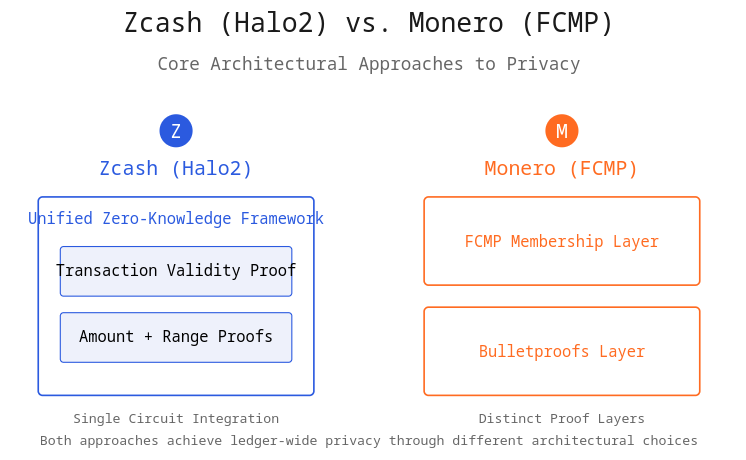
Source: X
Through Bitget Wallet’s cross-chain interface, users can send, receive, and monitor privacy coins seamlessly while keeping full custody of their private keys. This setup combines crypto anonymity with the convenience and security of a trusted Web3 ecosystem.
Top Privacy Coins at a Glance and How Do They Differ?
Privacy coins are designed to give users full control over their financial privacy by concealing transaction details on the blockchain. Each leading project approaches crypto anonymity differently — from Monero’s complete obfuscation to Zcash’s optional shielding and Dash’s focus on private payments. Understanding how these anonymity coins differ helps investors choose the right balance between privacy, transparency, and usability.
1. Monero (XMR): The Anonymity Standard
Monero is widely regarded as the benchmark for privacy coins, using Ring Confidential Transactions (RingCT) and stealth addresses to ensure every transfer is unlinkable and untraceable. Even blockchain analysts cannot determine transaction origins or destinations. Despite facing regulatory restrictions in some regions, Monero remains the most adopted anonymity coin for users prioritizing privacy over transparency.
Bitget Wallet allows decentralized Monero management, offering cross-chain tracking and secure storage under full user control.

Source: Monero
2. Zcash (ZEC): Optional Privacy and zk-Proof Innovation
Zcash stands out for its selective privacy model, allowing users to choose between transparent or shielded transactions. It relies on zk-SNARKs, an advanced form of zero-knowledge proofs that validate transactions without revealing any details. The 2025 halving event and the Zashi wallet upgrade have boosted cross-chain functionality and attracted more institutional users interested in compliant privacy solutions.
Source: Zcash
3. Dash (DASH): From PrivateSend to Payments
Originally known for its PrivateSend feature, Dash has evolved into a fast, low-cost payment network. Its focus has shifted from privacy toward global accessibility, with initiatives like Project Three Billion driving real-world crypto adoption in emerging markets. Dash’s hybrid identity as both a payment and privacy coin positions it uniquely in today’s evolving blockchain ecosystem.
Source: X
How Do Privacy Coins Compare to Bitcoin in Transparency and Use Cases?
| Feature | Bitcoin | Privacy Coins |
| Ledger Visibility | Fully public and traceable | Hidden through zk-proofs, stealth addresses, and ring signatures |
| Regulation | Broadly accepted by most exchanges and institutions | Restricted or delisted in some regions due to anonymity concerns |
| Primary Use | Store of value and global payment network | Private, censorship-resistant transactions and anonymous donations |
While Bitcoin emphasizes transparency and auditability to maintain trust in its network, privacy coins focus on safeguarding financial freedom and personal security in an increasingly monitored digital world.
Explore and store privacy coins securely with Bitget Wallet — your cross-chain hub for private assets.
What Is the Legal Status of Privacy Coins Around the World?
The legal status of privacy coins varies significantly across regions, reflecting the global debate between financial privacy and regulatory transparency. Countries like Japan, South Korea, and Australia have imposed outright bans or strict restrictions on trading privacy coins such as Monero (XMR) and Zcash (ZEC), citing anti–money laundering (AML) and counter-terrorism financing (CTF) concerns. These measures aim to ensure traceability in digital asset transactions, though they often limit individual financial freedom.
In contrast, the European Union’s MiCA framework (2024–2025) introduces compliance requirements rather than outright prohibitions. Exchanges must ensure that privacy features can be selectively disclosed to regulators — a move that balances innovation with accountability.
Despite skepticism, data from Chainalysis shows that only about 7% of privacy coin transactions are linked to illicit activity, according to CoinGecko’s 2025 report. This demonstrates that most users adopt privacy coins for legitimate data protection and personal sovereignty rather than criminal intent.
Bitget Wallet serves as a compliant non-custodial option for users who wish to manage, trade, and store privacy coins responsibly — maintaining privacy without compromising on legality or security.
What Are the Most Popular and Reliable Privacy Coins Right Now?
As privacy protection becomes a key concern in the digital economy, several privacy coins stand out in 2025 for their reliability, innovation, and real-world adoption. The best privacy coins in 2025 — Monero (XMR), Zcash (ZEC), and Dash (DASH) — continue to dominate due to proven technology and strong communities.
- Monero (XMR): Known as the gold standard of anonymity, Monero uses RingCT and stealth addresses to ensure complete privacy. It remains the most used coin for secure peer-to-peer transactions and personal asset protection.
- Zcash (ZEC): Offers optional transparency via zk-SNARKs, giving users control over what data is shared. Its latest upgrades enhance institutional adoption while maintaining private e-commerce usability.
- Dash (DASH): Originally a privacy-first coin, Dash has evolved into a fast, low-fee payment solution widely used in everyday transactions and donations.
Emerging privacy-focused projects like Mina Protocol and Oasis Network are gaining traction for integrating zero-knowledge technology and data-layer privacy into broader blockchain ecosystems, supporting use cases in e-commerce, charity, and personal digital security.
Bitget Wallet supports integrated multi-chain storage for these privacy assets, giving users secure, private, and compliant access across multiple blockchains.
How to Store and Trade Privacy Coins Safely?
Storing and trading privacy coins requires careful attention to wallet security and transaction anonymity. A non-custodial wallet lets users retain full ownership of their private keys — ensuring no third party can access their funds. Using cross-chain tools also allows seamless transfers between blockchains while maintaining privacy protections.
To stay safe:
- Always back up seed phrases offline.
- Avoid sharing wallet addresses publicly.
- Use built-in privacy features such as stealth addresses and shielded transactions.
- Verify sender and receiver authenticity before transferring funds.
Source: Spectrocoin
Bitget Wallet provides the ideal environment for privacy coin management. Its non-custodial architecture, built-in cross-chain tools, and top-grade encryption make it easy to trade and store coins like Monero, Zcash, and Dash safely.
Download Bitget Wallet to manage privacy coins, stablecoins, and cross-chain assets — all in one secure and user-friendly app.
Why Should Privacy Coin Users Choose Bitget Wallet for Storage and Trading?
With privacy coins becoming essential tools for digital sovereignty, secure management has never been more important. Bitget Wallet is designed for both new and advanced users who prioritize privacy, compliance, and control.
It offers:
- Self-custody and private-key ownership to ensure users maintain full access to their funds.
- Cross-chain support for Monero, Zcash, Dash, and major stablecoins.
- Integrated DeFi and memecoin trading for seamless portfolio diversification.
Built to combine security, usability, and compliance, Bitget Wallet empowers users to take control of their crypto journey safely and confidently.
Own your crypto journey — trade, store, and explore securely with Bitget Wallet.
Conclusion
Privacy coins prove that financial privacy and blockchain transparency can coexist through responsible innovation. As 2025 progresses, these projects continue to evolve — blending stronger privacy features with compliance measures that meet global standards.
From Monero’s full anonymity to Zcash’s optional zk-shielding and Dash’s real-world payment utility, each represents a unique step toward true digital freedom. Their growing relevance highlights the demand for secure, censorship-resistant transactions in a data-driven world.
Trade smart, store safe — download Bitget Wallet for secure cross-chain access to privacy coins and stablecoins today.
Sign up Bitget Wallet now - grab your $2 bonus!
FAQ
1. What are privacy coins?
Privacy coins are cryptocurrencies that conceal wallet addresses, transaction amounts, and user identities using advanced cryptography.
2. How do privacy coins work?
They use technologies like stealth addresses, ring signatures, and zero-knowledge proofs (zk-SNARKs) to anonymize transactions on the blockchain.
3. Are privacy coins legal in 2025?
Yes, but with regional restrictions. Countries such as Japan, South Korea, and Australia limit them, while the EU’s MiCA framework allows regulated use under transparency requirements.
4. What are the best privacy coins to buy in 2025?
Monero (XMR), Zcash (ZEC), and Dash (DASH) lead the market for proven anonymity, while Mina Protocol and Oasis Network are emerging as innovative privacy-layer projects.
5. Where can I store privacy coins safely?
Use Bitget Wallet, a secure, non-custodial, multi-chain wallet designed for storing, trading, and managing privacy coins responsibly and privately.
Risk Disclosure
Please be aware that cryptocurrency trading involves high market risk. Bitget Wallet is not responsible for any trading losses incurred. Always perform your own research and trade responsibly.

 What Is Crypto Fear and Greed Index: How Traders Read Fear vs Greed Signals2025-11-19 | 5 mins
 How to Pay with Crypto: Fast, Safe, and Beginner-Friendly Method2025-11-18 | 5 mins
- How to Convert Your Crypto to Cash: 5 Easy Ways for Beginners2025-11-18 | 5 mins


