


What Is x402 Protocol: Inside Coinbase’s New Standard for Onchain and AI Payments

What is x402 protocol? The x402 Protocol is Coinbase’s new HTTP-based payment standard that revives the long-dormant HTTP 402 Payment Required code into a functional on-chain payment mechanism. Developed in collaboration with Cloudflare and supported by the emerging x402 Foundation, this open protocol allows websites, APIs, and AI agents to request and verify crypto payments directly through the web’s native HTTP layer.
At its core, Coinbase x402 protocol introduces a standardized way for clients and servers to exchange value without centralized intermediaries — using USDC or other stablecoins over networks like Base. By turning payments into part of the web request-response cycle, x402 enables AI payments, API monetization, and onchain commerce to operate programmatically and instantly.
As machine-to-machine and agentic transactions grow, x402 could redefine how AI and Web3 interact financially — creating a future where digital agents can pay, earn, and transact natively on the internet.
Key Takeaways
- x402 Protocol turns the HTTP 402 Payment Required status into a real, programmable payment system for on-chain commerce.
- Coinbase x402 enables frictionless AI payments and micropayments via standard HTTP requests — no new APIs or SDKs required.
- The open-source x402 Foundation, backed by Coinbase and Cloudflare, drives adoption across developers, wallets, and networks.
What Is x402 and Why Did Coinbase Create It?
x402 Protocol reimagines how the web handles value exchange. Historically, the HTTP 402 code was reserved for “Payment Required” but never implemented. Coinbase saw an opportunity to modernize it — turning an unused status into a gateway for onchain payments, compatible with any web server or API.
Source: Coinbase.com
How does the HTTP 402 status code evolve into x402 payments?
| Concept | Traditional HTTP 402 (1999-2023) | Coinbase x402 Protocol (2024-) |
| Purpose | Placeholder for “Payment Required” | Fully functional on-chain payment instruction |
| Supported by | None | Coinbase Developer Platform (CDP) + Facilitators |
| Payment medium | Undefined | USDC / stablecoins via Base, Ethereum, Solana |
| Flow | Static response | Request → 402 Response → Payment → Verification → 200 OK |
Coinbase “revived” the dormant status by attaching structured payment metadata to the HTTP 402 response, letting a client automatically generate and attach a valid on-chain payment payload. This transformation makes web-native blockchain transactions possible — frictionless for developers, wallets, and AI agents alike.
What problem does x402 solve in the modern internet economy?
Legacy payment systems require account setup, KYC, and complex gateways, creating friction for API access, data licensing, and subscription models. The x402 protocol removes these barriers by supporting micropayments and agentic payments — allowing autonomous AI systems to pay per request or per data query.
In short, x402 solves the “payments for machines” gap, bringing instant, permissionless value transfer directly to the web layer.
How Does the x402 Protocol Work?
x402 protocol defines a lightweight, HTTP-native process for exchanging payments between clients and servers. It integrates seamlessly with existing web infrastructure and works across multiple blockchains through facilitator services.
What is the x402 payment flow?
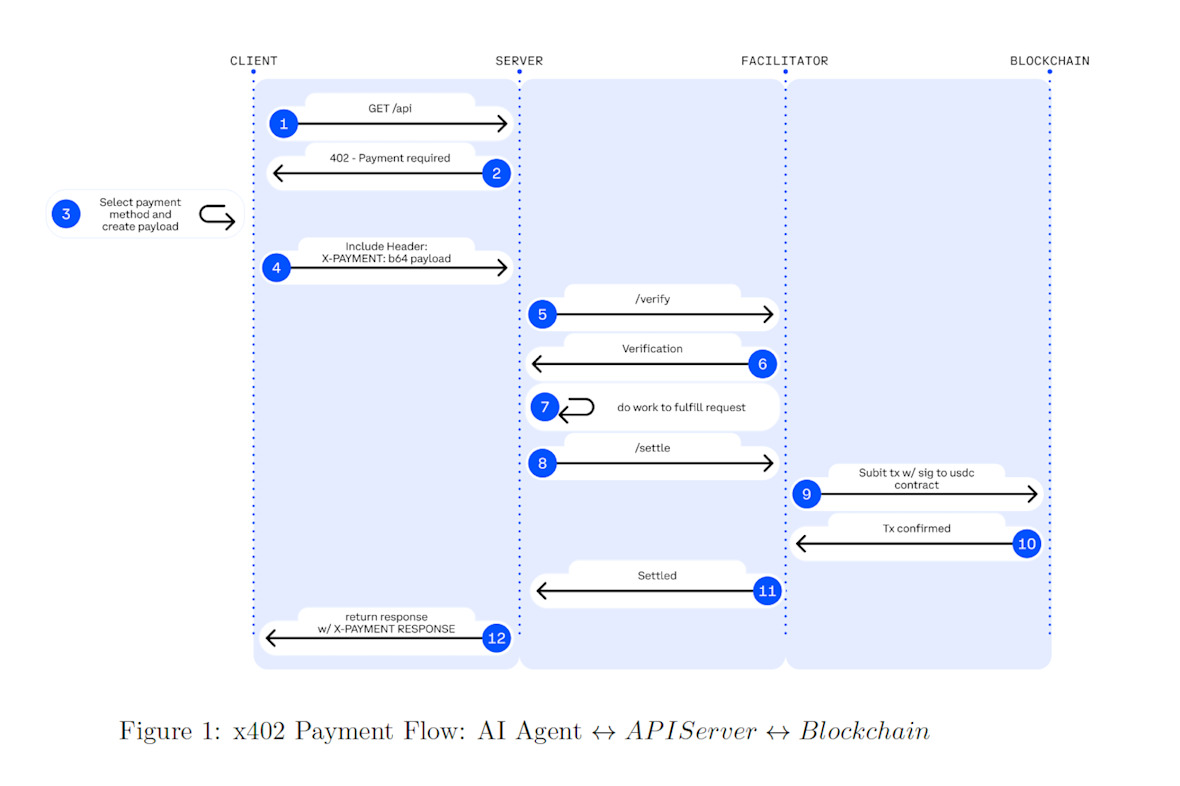
Below is the verified x402 payment flow based on Coinbase’s official documentation:
- Client makes HTTP request → Sends a normal request for a protected resource.
- Server responds with 402 → Returns HTTP 402 Payment Required plus payment details.
- Client creates payment → Uses its wallet to build a payment payload (e.g., USDC on Base).
- Client resubmits with payment → Adds the signed payload in the
X-PAYMENTheader.
- Server verifies payment → Validates locally or via a facilitator service.
- Facilitator validates → Confirms payment and returns a verification response.
- Server processes request → If valid, the resource is unlocked.
- Payment settlement → Initiated on-chain directly or through a facilitator endpoint.
- Facilitator submits on-chain → Broadcasts the transaction and waits for confirmation.
- Settlement confirmation → Once confirmed, facilitator returns execution results.
- Server delivers resource → Responds 200 OK with the requested content + settlement data.
This sequence transforms every HTTP interaction into a self-contained payment cycle, making blockchain transactions as simple as loading a webpage.
Source: Coinbase.com
What is the role of facilitators and networks?
- Facilitator: A verification and settlement service — e.g., Coinbase Developer Platform (CDP) — that checks the validity of each payment and submits it on-chain.
- Networks: x402 is blockchain-agnostic. It currently supports Base for near-instant USDC settlements and is expanding to Ethereum, Polygon, and Solana.
- Design principles: Stateless, HTTP-native, and developer-friendly — requiring minimal code changes for integration.
Through this modular design, x402 Protocol unites web servers, wallets, and blockchain networks into one seamless, programmable payment layer.
What Are the Key Benefits and Use Cases of x402?
x402 unlocks a new era of micropayments, agentic payments, and machine-to-machine (M2M) transactions, enabling seamless onchain commerce across the Web3 ecosystem.
Source: Coinbase.com
How can developers and creators use x402?
Developers and content creators can easily integrate x402 to enable frictionless, per-use monetization models across multiple domains:
- API monetization: Charge users per call instead of monthly subscriptions. For example, a weather or AI inference API can require a few cents in USDC for each request.
- Content paywalls: Enable micro-access to digital content — single articles, short videos, or research datasets — without account registration.
- Cloud storage pay-per-use: Allow users to pay per MB or per request directly via stablecoins using x402’s HTTP 402 status, eliminating traditional logins or API keys.
x402’s flexibility means any web endpoint can require payment dynamically — using JSON-based payment definitions and signed authorizations — reducing integration friction for developers.
How do AI agents benefit from agentic payments?
Agentic payments describe the ability of AI agents to autonomously pay for data, compute power, or API access using digital assets.
- AI models like Gemini or Claude can use Payments MCP (Multi-Chain Payments) to conduct onchain transactions directly with services — without human intervention.
- These transactions occur between machine-to-machine (M2M) systems, forming the foundation for automated AI-to-AI economies.
- IoT devices can also leverage x402 for automated payments, such as data uploads, cloud processing, or resource usage.
By integrating x402, AI systems can move beyond static subscriptions toward dynamic, pay-per-use payments — a key step toward the “Agentic Web.”
What projects are building on x402?
Several innovative projects are already experimenting with or building around x402 protocol:
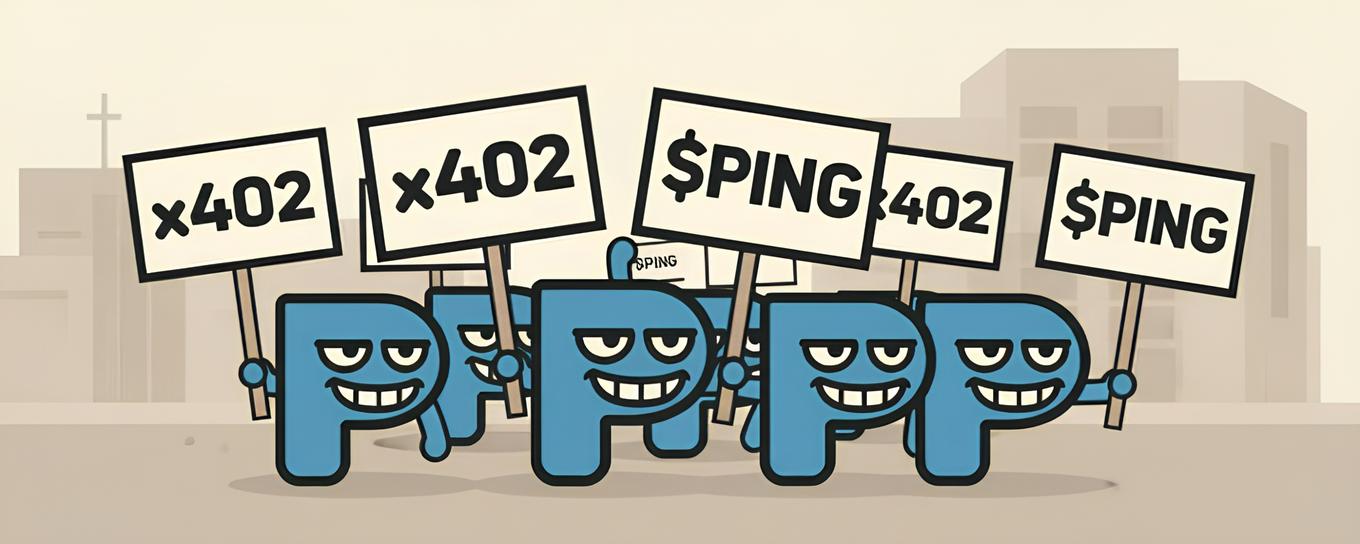
- $PING – First Token Minted via x402:
- Minting required ~1 USDC per transaction, rewarding users with approximately 5,000 PING tokens on Base blockchain.
- Over 150,000 x402 transactions were processed in the first month, totaling about 140,000 USD in value — marking one of the first large-scale tests of x402’s micro-payment infrastructure.
- Although primarily a meme token, PING’s launch showcased the scalability and real-world viability of the x402 payment flow.
- Questflow, AurraCloud, Meridian, PayAI, Daydreams, Gloria AI, and Kite AI are also exploring x402 integration to enable agentic payments and machine-driven financial transactions in AI ecosystems.
- The x402 Foundation, supported by Coinbase and Cloudflare, continues to expand open-source standards for HTTP 402 Payment Required adoption across Web3 and AI infrastructure.
Source: Ping on X
Read more: What is $PING?
How Does x402 Compare to Traditional Payment Systems?
x402 protocol streamlines digital payments by embedding them directly into web communication — eliminating intermediaries, delays, and service fees typical of traditional payment processors.
What are the key differences in speed and cost?
| Feature | Traditional Payment | x402 Protocol |
| Settlement Speed | 1–3 business days | ≈ 2 seconds (onchain confirmation) |
| Fees | ~2.9% + $0.30 per transaction | 0 protocol fees + minimal gas cost |
| Minimum Transaction | ≈ $1 | < $0.01 (micropayment-friendly) |
| Privacy | Requires account / KYC | Pseudonymous on-chain |
| Access Model | Subscription-based | Pay-per-use via HTTP 402 |
These differences make x402 particularly suited for micro-transactions, real-time API billing, and AI-driven agentic economies where latency and cost efficiency are critical.
Source: Coinbase.com
Why is x402 a breakthrough for Web3 and AI payments?
x402 introduces several architectural innovations that make it transformative for modern onchain commerce:
- Zero intermediaries: Payments flow directly between client and server, reducing reliance on custodial platforms or processors.
- Programmable micropayments: Developers can automate payments for specific actions, API calls, or data access using smart contracts.
- Stateless authentication: Each payment carries its own verification, meaning payment = authentication = access, removing the need for OAuth or API keys.
This model aligns perfectly with the Web3 principle of trustless, permissionless access, paving the way for a more fluid digital economy.
What Does x402 Mean for the Future of AI and Onchain Commerce?
x402 protocol lays the groundwork for a future where commerce is not only decentralized but also autonomous — with AI agents and smart services able to transact seamlessly in stablecoins.
Will x402 replace subscriptions with pay-per-use models?
- Growing “subscription fatigue” across SaaS and Web3 has increased demand for pay-per-action billing.
- With x402, users can pay as little as a few cents per action — e.g., AI inference at $0.01 per call or cloud storage per GB used — creating transparency and flexibility.
- Coinbase envisions this as part of “agentic commerce,” where autonomous systems purchase only what they need, when they need it.
How will x402 drive stablecoin and cross-chain adoption?
- USDC serves as the default payment currency for x402 on the Base network.
- Cloudflare’s deferred payment scheme may aggregate thousands of micro-transactions into periodic onchain settlements — reducing gas costs while maintaining transparency.
- The x402 ecosystem is expected to expand toward hybrid commerce, supporting credit cards and bank rails for off-chain settlements bridged by stablecoins.
Through these mechanisms, x402 could become the core payment layer for AI and Web3 commerce, connecting digital assets, agents, and services across multiple chains.
Read more: Bitget Academy – USDC
How to Use Bitget Wallet to Explore Onchain Payments Safely
Bitget Wallet is your trusted gateway to the Web3 payment layer, empowering users to interact securely with decentralized protocols like x402. As a non-custodial, multi-chain wallet with over 80 million users worldwide, Bitget Wallet offers seamless access to blockchain networks and AI-driven financial tools.
How can users join the x402 economy with Bitget Wallet?
Bitget Wallet acts as the bridge between traditional crypto use and the emerging onchain payment economy powered by x402. Through its integrated tools and payment capabilities, users can easily test and experience agentic payments, microtransactions, and AI-powered financial apps.
Main Features of Bitget Wallet
| Feature | Description |
| Stablecoin Earn Plus | Earn up to 10% APY on stablecoins through secure yield programs. |
| Zero-Fee Trading | Trade memecoins and RWA U.S. stock tokens with no transaction fees. |
| Cross-Chain Compatibility | Seamlessly supports 130+ blockchains including Base, Solana, Ethereum, BNB Chain, and Polygon. |
| Crypto Card (Mastercard & Visa) | Spend crypto globally with zero fees and instant conversion. |
Step-by-Step: How to Join the x402 Payment Ecosystem
- Download Bitget Wallet
- Available on iOS and Android.
- Create a multi-chain account in seconds.
- Deposit Stablecoins
- Add USDC or other stablecoins on Base or your preferred chain.
- This enables participation in x402-style pay-per-use transactions.
- Explore AI & Payment DApps
- Connect Bitget Wallet to DApps or AI platforms that support x402.
- Experiment with agentic payments, API micropayments, or onchain commerce tools directly from your wallet.
“Trade, earn, and experiment with on-chain payments through Bitget Wallet — the secure gateway to the AI-powered Web3 economy.”
Conclusion
What is x402 protocol? Essentially, it’s Coinbase’s bold “upgrade” to the long-forgotten HTTP 402 Payment Required status code — reimagined as a programmable backbone for AI and Web3 transactions. By embedding onchain transfers directly into ordinary web requests, x402 creates a frictionless environment where machines, APIs, and AI agents can autonomously exchange value.
With Coinbase driving innovation and Cloudflare ensuring global scalability, x402 is paving the way for an Agentic Internet — where artificial intelligence and decentralized finance merge seamlessly. For everyday users, Bitget Wallet serves as the perfect starting point: a secure, multi-chain wallet to store stablecoins, trade assets, and explore the emerging AI-driven payment ecosystem built on x402.
“With Bitget Wallet, anyone can explore onchain payments, manage stablecoins, and trade AI-linked assets securely — all in one place.”
Sign up Bitget Wallet now - grab your $2 bonus!
FAQs
1. What is x402 Protocol?
The x402 Protocol is Coinbase’s new HTTP-based payment standard that transforms the long-unused HTTP 402 “Payment Required” code into a real on-chain payment mechanism. It allows websites, APIs, and AI agents to request and verify crypto payments directly through the web — using USDC and other stablecoins on networks like Base, Ethereum, and Solana.
2. How does x402 enable AI and M2M payments?
x402 lets AI agents or automated systems pay for services, data, or compute power on demand — without human intervention. By embedding payments directly into HTTP requests, it creates a foundation for agentic commerce, where intelligent systems can transact autonomously in stablecoins.
3. Which wallet is best for exploring x402 payments?
Bitget Wallet is the best option for trying x402 payments and AI-powered Web3 apps. It supports Base, Ethereum, and Solana, enabling smooth stablecoin transfers and onchain transactions. With zero-fee trading and 10% APY Stablecoin Earn Plus, it’s ideal for exploring the next wave of agentic payments securely.
Risk Disclosure
Please be aware that cryptocurrency trading involves high market risk. Bitget Wallet is not responsible for any trading losses incurred. Always perform your own research and trade responsibly.


- How to Launch a MemeCoin Using the x402 Protocol?2025-10-27 | 5 mins


