


1
/
4
What scams might you encounter?
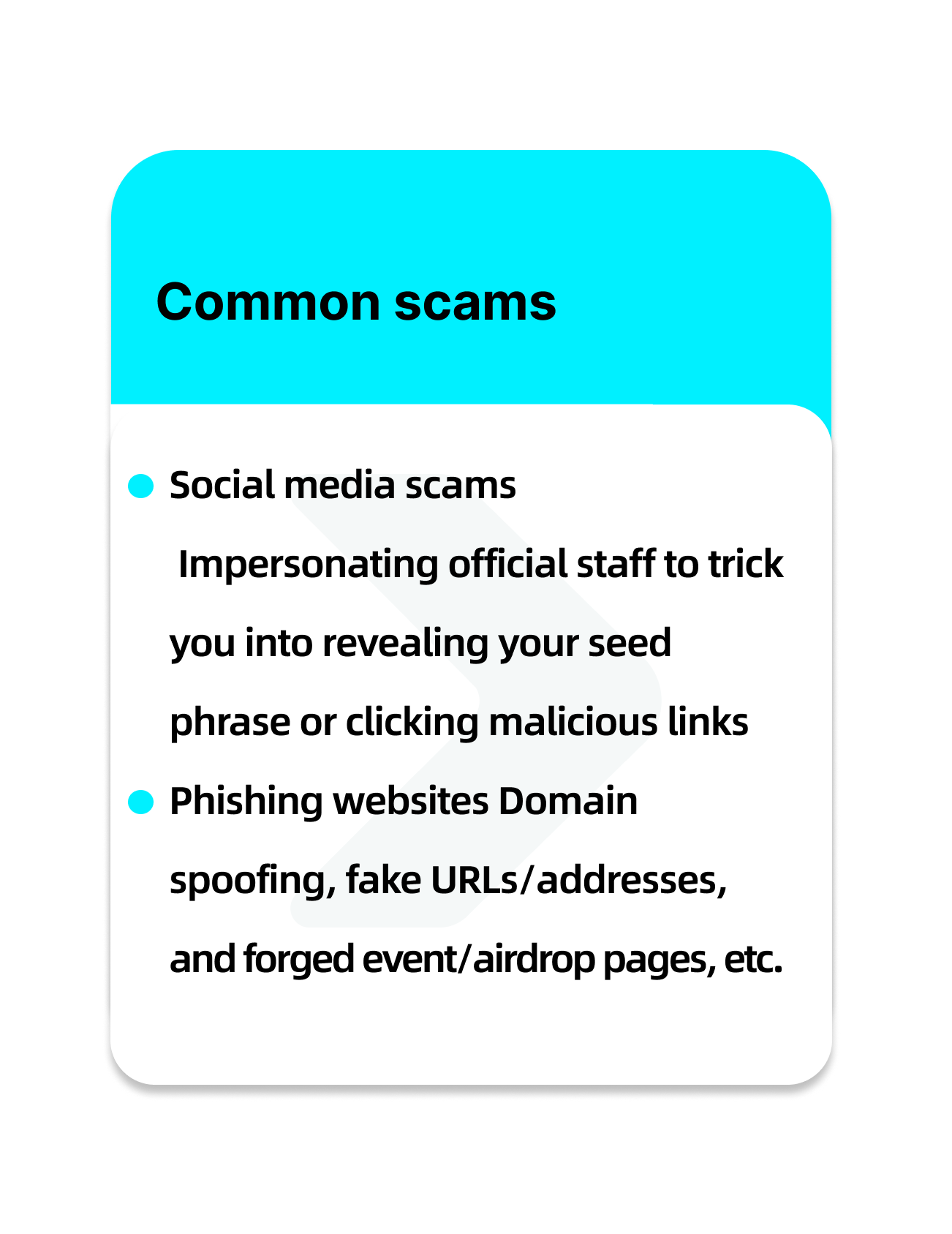
Because a decentralized wallet means you manage your own assets, you may be targeted by various scams and phishing attempts aiming to steal your seed phrase or private key, or to trick you into approving malicious, fund-draining contracts. Stay vigilant. Common types include social platform scams and phishing websites.
Because a decentralized wallet means you manage your own assets, you may be targeted by various scams and phishing attempts aiming to steal your seed phrase or private key, or to trick you into approving malicious, fund-draining contracts. Stay vigilant. Common types include social platform scams and phishing websites.
1
/
4
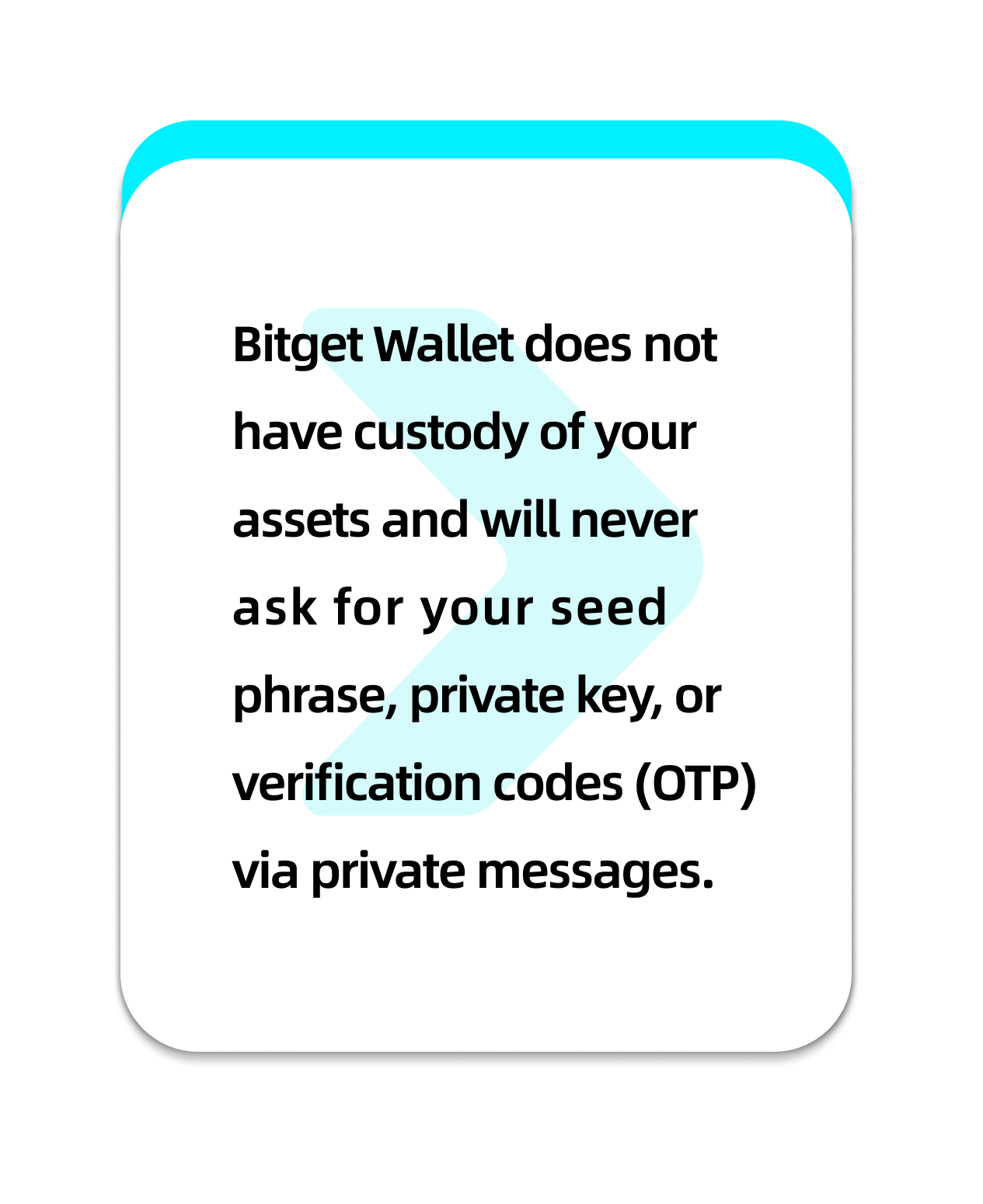
Social media scams
Scammers often impersonate customer support, airdrop project teams, or "investment mentors", proactively DM you, and try to induce you to transfer funds, disclose your seed phrase, or click malicious links.
<b>Remember: as a decentralized wallet, Bitget Wallet does not have custody of your assets and will never ask for your seed phrase, private key, or verification codes (OTP) via private messages.</b>
1
/
4
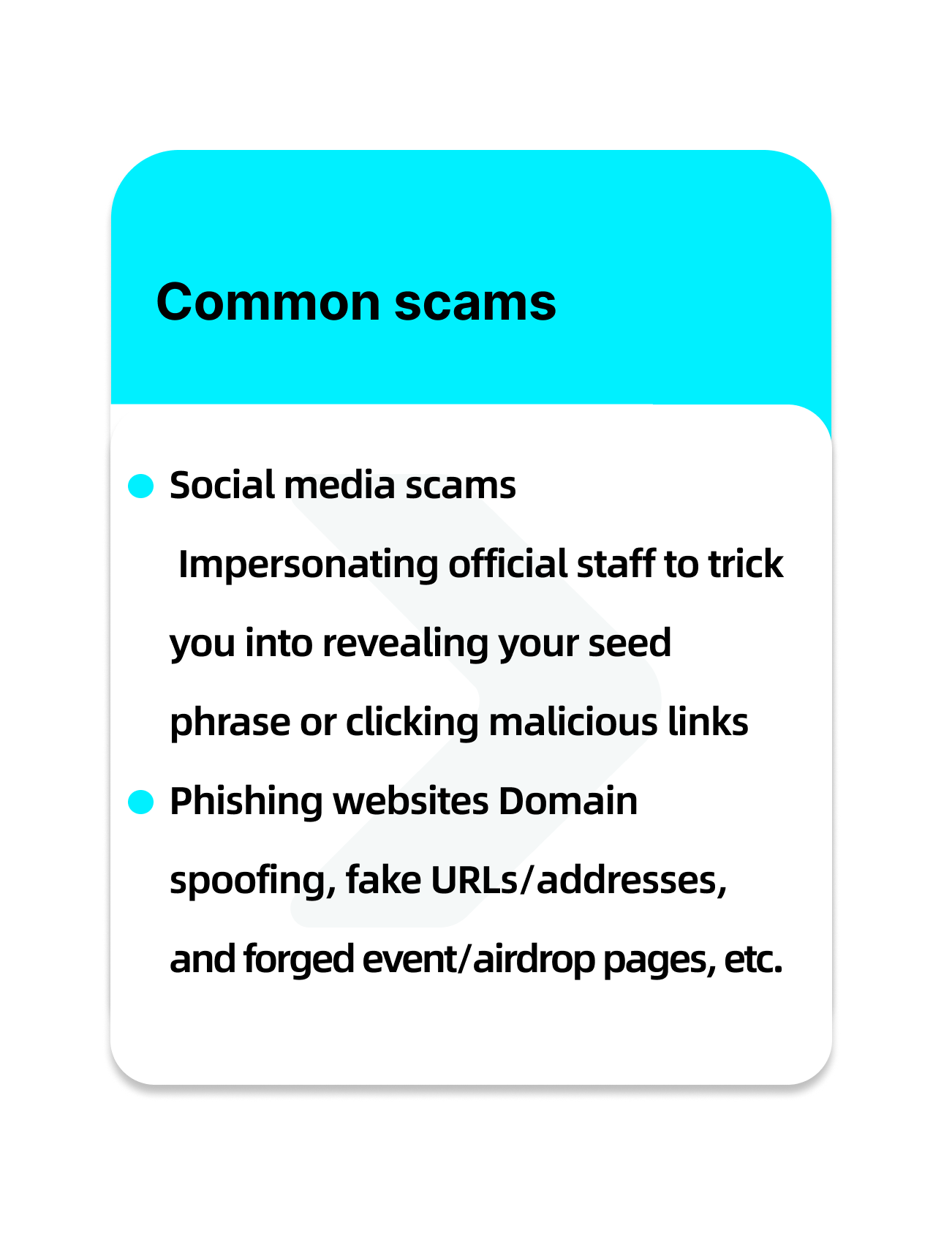
Phishing websites
Common tactics include:
1.<b>Domain spoofing</b>: using a domain very similar to the official one (e.g., writing web3.bItget.com instead of web3.bitget.com by replacing lowercase “i” with uppercase “I”).
2.<b>Search engine ads</b>: when searching "Bitget Wallet" on Google or Bing, the top ad result may be a fake site.
3.<b>Fake airdrop or task pages</b>: they ask you to connect your wallet and sign, but the approval is actually a draining contract.
1
/
4
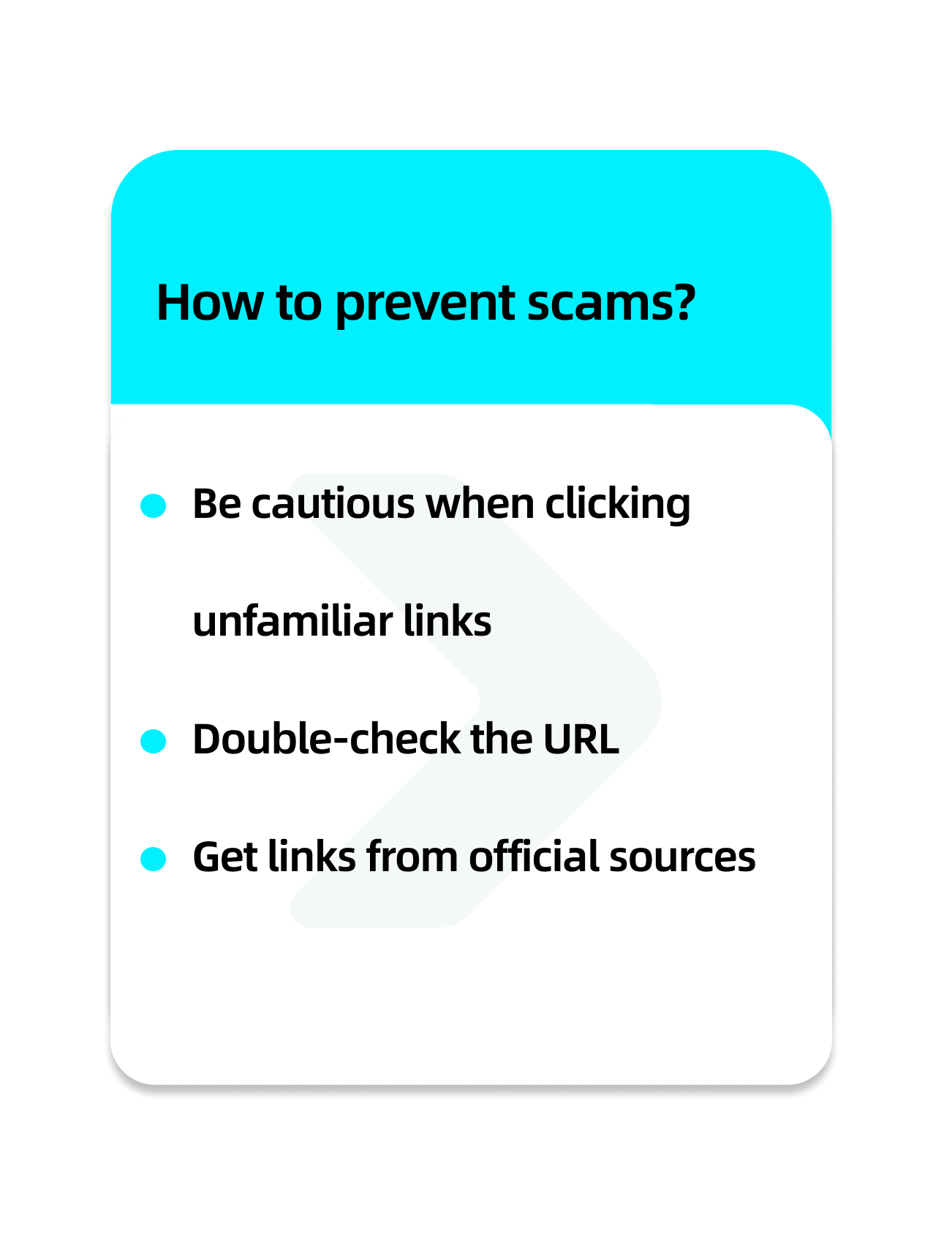
How to prevent scams
1.Be cautious about links sent by strangers, even if their profile looks official.
2.Double-check the URL before logging in or connecting your wallet.
3.Only use links from official channels (official websites, app stores, official social accounts).