


1
/
5
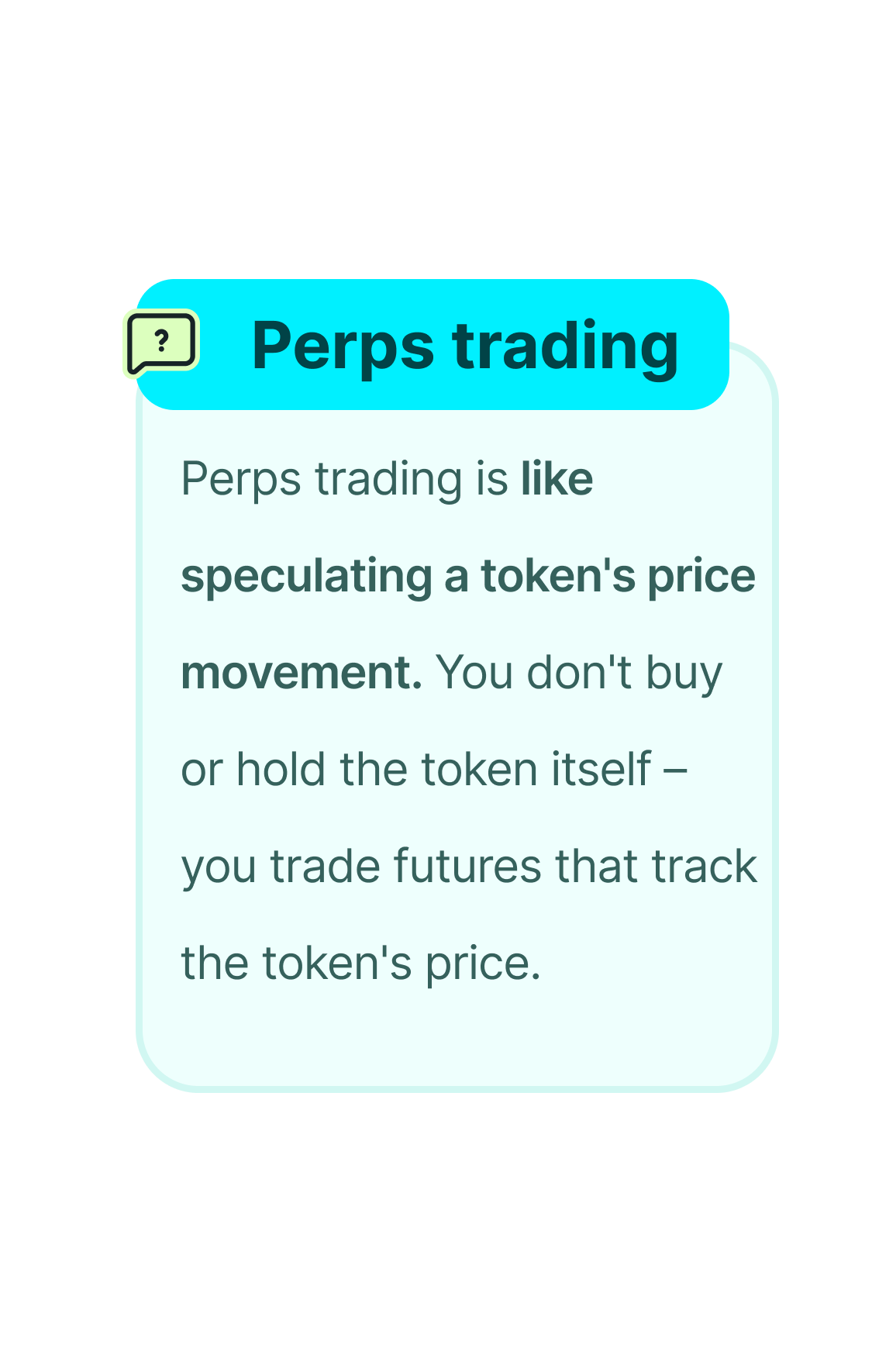
What is perps trading?
Perps trading is <b>like speculating a token's price movement</b>. You don't buy or hold the token itself – you trade perps that track the token's price. Your profit and loss (PnL) depend on how the price moves.
Perps trading is <b>like speculating a token's price movement</b>. You don't buy or hold the token itself – you trade perps that track the token's price. Your profit and loss (PnL) depend on how the price moves.
1
/
5
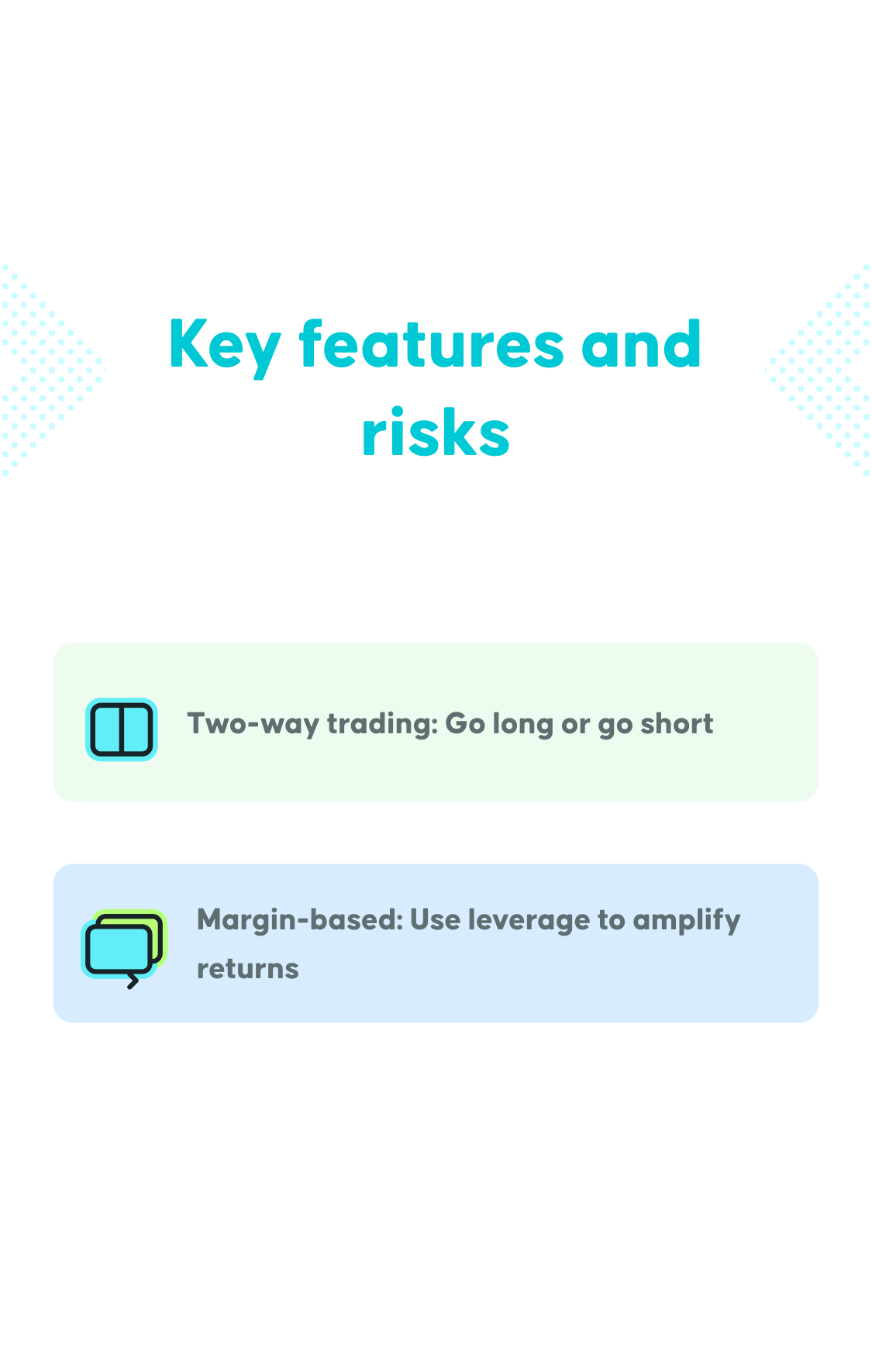
Key features and risks
<b>Two-way trading</b>: You can "go long" (buy to open) if you expect the price to rise, or "go short" (sell to open) if you expect the price to fall.
<b>Margin and leverage</b>: Your margin is a small deposit that lets you control a bigger trade (leverage). Leverage multiplies outcomes: at 10x leverage, a 1% token price move changes your PnL by about 10% – up or down.
1
/
5
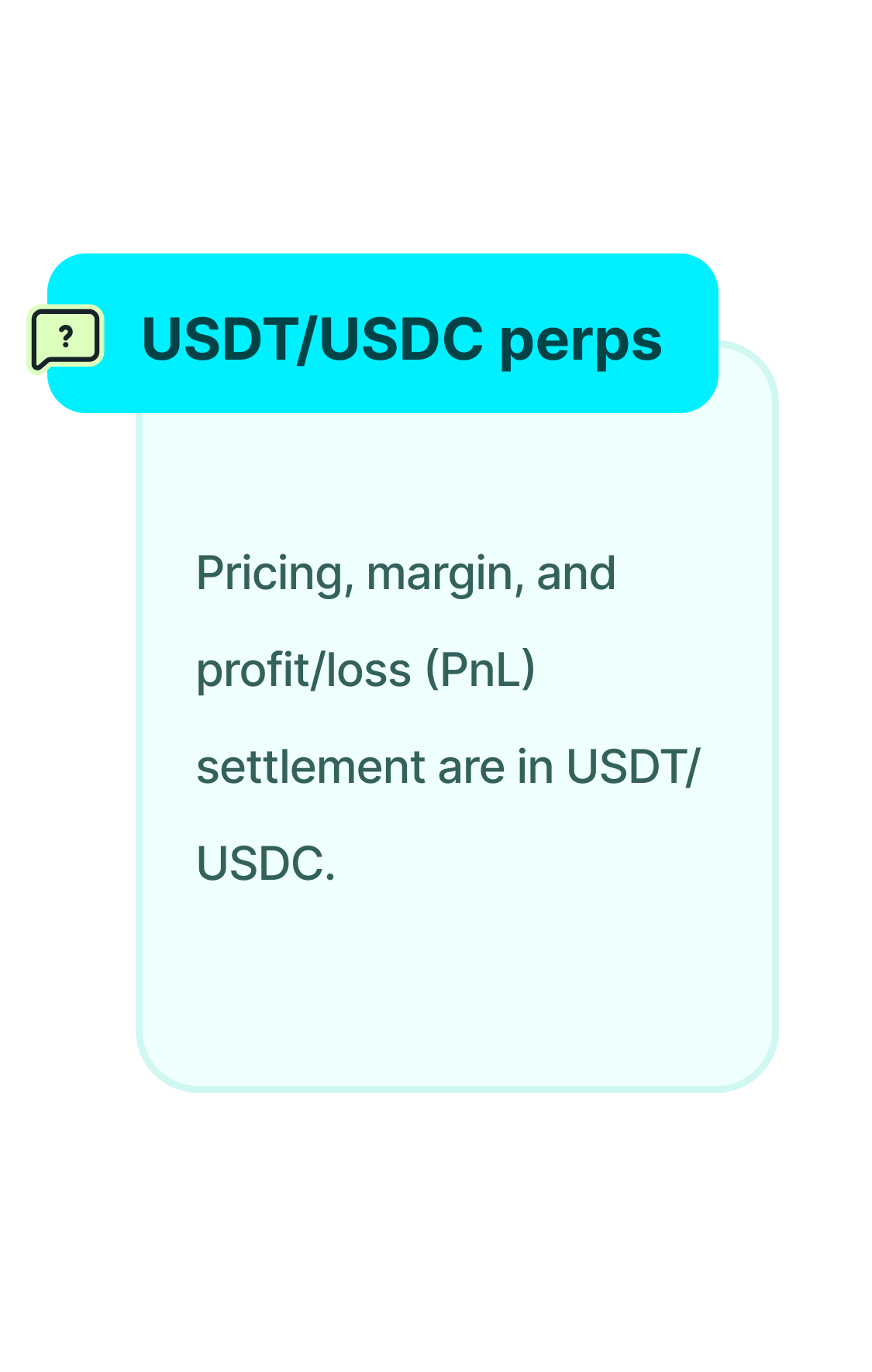
USDT/USDC perps
USDT/USDC-margined (linear) perps: Quoted, margined, and settled in USDT/USDC.
Token-margined (inverse) perps: Quoted in USD terms but margined and settled in a token like BTC.
In Bitget Wallet, you can trade USDT/USDC-margined perps. <b>Pricing, margin, and PnL are all in USDT/USDC, so holding USDT/USDC is enough to participate.</b>
Perpetual perps (perps) have no expiry date, so you can hold the position as long as you maintain margin (minimum equity you must always keep. If your equity drops below this, your position can be liquidated).
1
/
5
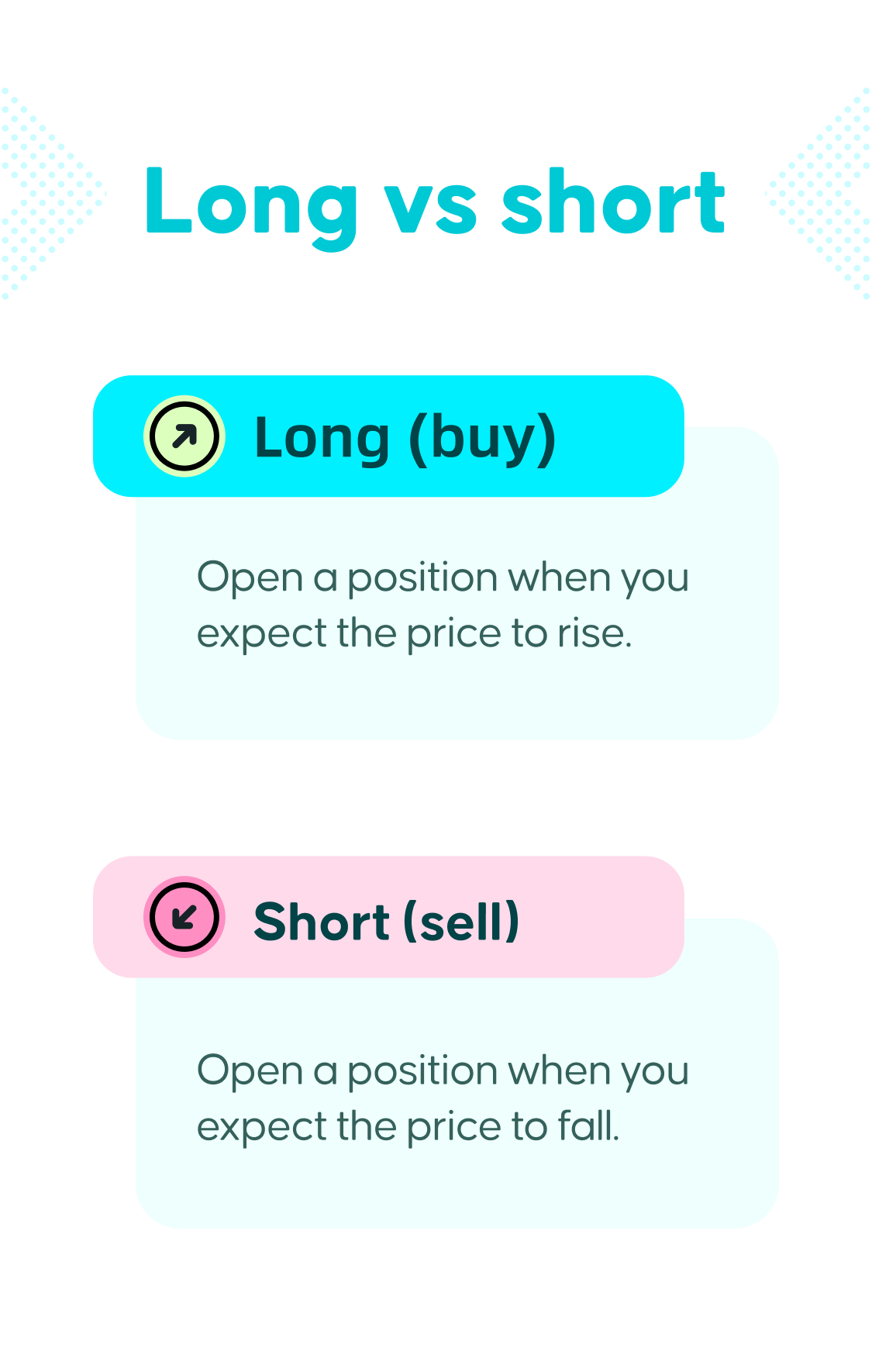
Long vs. short
Here's how perps work: You deposit margin, use leverage to scale your position, then choose to go long (buy) or go short (sell) to trade the underlying token's price moves. You close the position at the right time to realize profits or losses. So it's important to pick the right direction when trading perps.
Long (buy): Open a position when you expect the price to rise.
Short (sell): Open a position when you expect the price to fall.
1
/
5
Setting leverage
Choose a leverage level when opening a position (e.g., 5x, 10x, 20x). Higher leverage increases both potential returns and risk. <b>Set leverage conservatively based on your risk tolerance.</b>
