


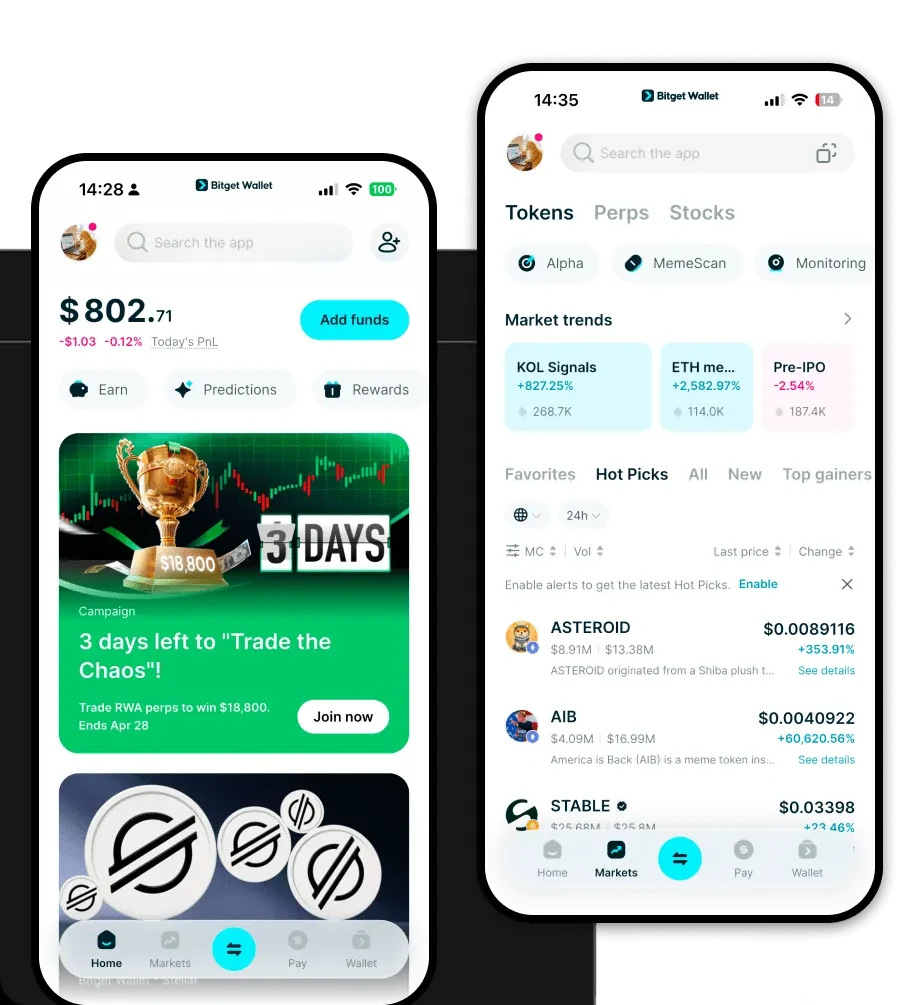
1. What is a BTF Wallet?
A BTF wallet is a digital gateway designed to interact with the BTF ecosystem on the EVM (Ethereum Virtual Machine) blockchain. Since BTF operates within the EVM environment, you need a specialized interface that supports Ethereum-based standards to hold, send, and receive your tokens securely. Bitget Wallet is a reliable and secure crypto wallet trusted by 40 million users, designed for seamless Web3 exploration and asset management.
2. Download Bitget BTF Wallet
Getting started with your BTF assets requires a tool that balances power with simplicity. Whether you are an experienced DeFi user or just starting your journey, you can download Bitget Wallet to access a comprehensive suite of tools. The application offers a seamless experience across iOS, Android, and browser extensions, ensuring your portfolio is always within reach. By choosing a non-custodial solution, you retain full control over your private keys and seed phrases, which is the gold standard for security in the Web3 space. Furthermore, the wallet's multi-chain support means you are not limited to just one ecosystem, allowing for effortless management of diverse assets alongside your BTF tokens.
3. Why Choose Bitget BTF Wallet?
As an infrastructure-focused tool, Bitget Wallet is built specifically to address the complexities of EVM ecosystems. Here is why it stands out for BTF holders:
- EVM Compatibility: Designed for full integration with Ethereum and its layer-2 scaling solutions, ensuring you can interact with any BTF-related smart contracts without technical friction.
- Non-Custodial Security: You own your private keys, meaning your assets are never held by a third party, providing true sovereignty over your digital wealth.
- Decentralized Exchange Aggregation: Access superior liquidity by scanning hundreds of DEXs automatically, ensuring you get the best rates for your BTF trades.
- Cross-Chain Interoperability: Move assets between chains seamlessly with built-in bridges, eliminating the need for complex, manual transfer processes.
- NFT Asset Management: A dedicated, visual-first interface for viewing and managing your NFT collections directly within your wallet address.
4. How to Create a BTF Wallet
Setting up your wallet is a straightforward process designed to prioritize your security:
1. Download and Install: Visit the official website to download Bitget Wallet for your preferred device (mobile or desktop extension).
2. Create New Wallet: Open the app and select 'Create a New Wallet' to generate a fresh, secure address on the EVM network.
3. Secure Your Recovery Phrase: You will be given a 12 or 24-word recovery phrase. Write this down on paper and store it offline; never share this with anyone, as it is the only way to recover your wallet.
4. Verify Your Phrase: The app will prompt you to re-enter the words to ensure you have backed them up correctly.
5. Set a Password: Create a strong, unique password for your device to provide an extra layer of protection when accessing your wallet locally.
5. What Can You Do With a BTF Wallet?
With Bitget Wallet, your BTF tokens become active, productive assets rather than just static numbers on a screen. Here is how you can utilize your wallet:
- Trading: Execute instant trades for BTF against other tokens using the built-in decentralized exchange aggregator to find the most favorable market prices.
- Asset Storage: Safely hold your BTF long-term in a non-custodial environment protected by advanced encryption and the Bitget security fund.
- dApp Interaction: Connect your wallet to various decentralized applications (dApps) to participate in governance, liquidity pools, or other ecosystem activities.
- NFT Minting: Use your BTF wallet address to interact with NFT marketplaces, allowing you to mint new digital collectibles or purchase existing ones.
- Cross-Chain Swapping: Effortlessly convert your BTF or other assets across different EVM chains, maintaining liquidity without relying on centralized exchanges.
6. How BTF Wallets Are Different from Other Crypto Wallets
The primary difference lies in the architecture of the EVM ecosystem. Unlike Bitcoin-based wallets that rely on the UTXO (Unspent Transaction Output) model, a BTF wallet utilizes an 'Account Model.' This allows for complex smart contract interactions, which are essential for DeFi and NFT applications. Furthermore, while some older wallets struggle with gas fee management, Bitget Wallet optimizes your transaction experience by providing real-time gas fee estimates and suggestions. This ensures you are not overpaying for network congestion, making your interactions with the EVM blockchain both faster and significantly more cost-effective than using generic or legacy wallet interfaces.
