


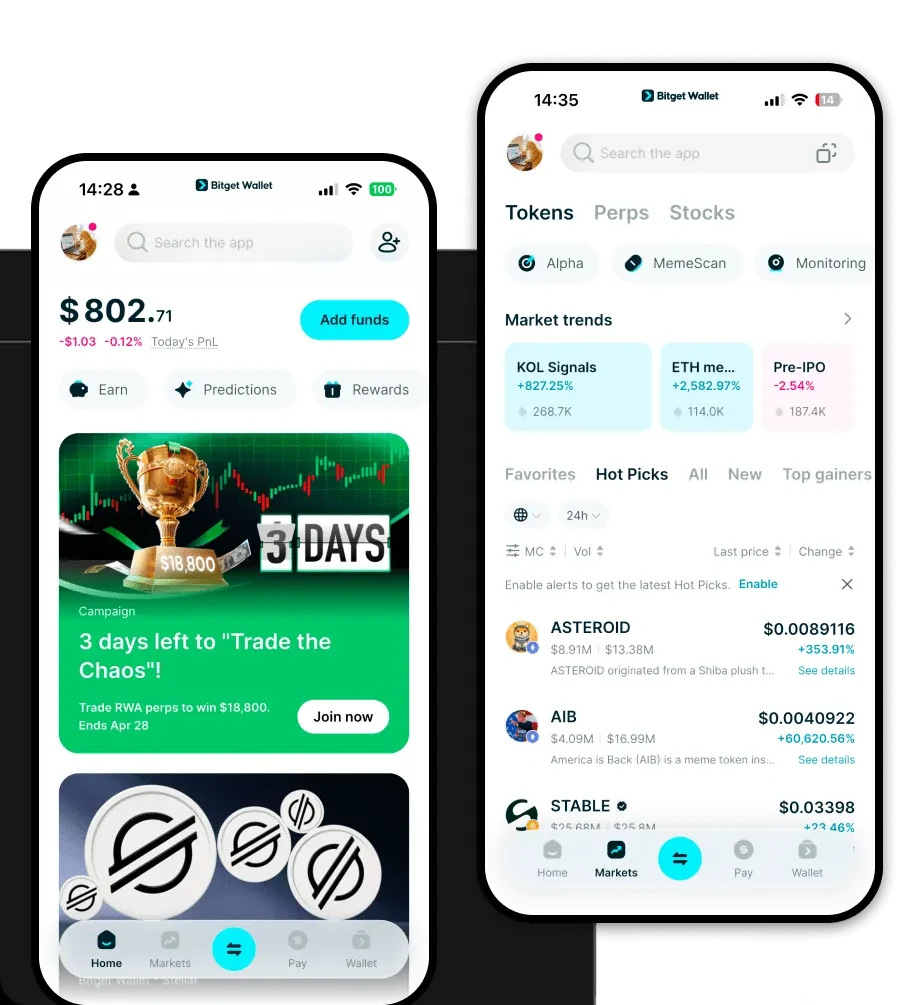
What is a qs Wallet?
A qs wallet is a specialized digital interface designed to interact with the qs token, which operates on the EVM (Ethereum Virtual Machine) blockchain. Because qs is built on EVM architecture, it requires a wallet that supports the robust standards of the Ethereum ecosystem, allowing for seamless integration with smart contracts and decentralized applications. Bitget Wallet is a reliable and secure crypto wallet trusted by 40 million users, designed for exploring the Web3 ecosystem, managing assets, and facilitating secure transactions.
Download Bitget qs Wallet
Getting started with your qs assets requires a platform that balances accessibility with high-end security. Bitget Wallet offers a comprehensive solution that serves as your gateway to the broader Web3 space. With comprehensive multi-chain support, you are not limited to just one network, allowing for fluid interaction across the entire EVM landscape. As a non-custodial wallet, it ensures that you maintain full control over your private keys, meaning you are the sole custodian of your digital wealth. Whether you are on the move or at your desk, you can download Bitget Wallet across iOS, Android, or as a browser extension to ensure your qs tokens are always at your fingertips.
Why Choose Bitget qs Wallet?
Selecting the right infrastructure for your tokens is critical, especially within the complex EVM ecosystem. Bitget Wallet stands out by offering tailored advantages for infrastructure-focused assets like qs:
- Seamless EVM Compatibility: Designed specifically for EVM chains, the wallet ensures that interacting with qs smart contracts is intuitive, fast, and free from common compatibility glitches.
- Advanced DEX Aggregation: By aggregating liquidity from hundreds of decentralized exchanges, the wallet ensures you get the best market rates when swapping your qs tokens.
- Robust Non-Custodial Security: With a dedicated 300 million USD protection fund, your assets are shielded by industry-leading security measures while you retain total ownership.
- Integrated dApp Ecosystem: The built-in dApp browser allows you to connect your wallet directly to decentralized protocols, making it easier to participate in governance or staking without leaving the app.
How to Create a qs Wallet
Setting up your wallet is a straightforward process that prioritizes your security from the very first step:
- Download & Install: Navigate to the official store or the website to download Bitget Wallet and install it on your preferred device.
- Create New Wallet: Open the application and select 'Create Wallet'. You will be prompted to set a strong, unique password for app access.
- Backup Your Seed Phrase: The app will generate a 12-word recovery phrase. Write this down on paper and store it offline; never share this with anyone, as it is the only way to recover your assets.
- Verify Phrase: Re-enter the seed phrase as prompted to confirm that you have recorded it accurately.
- Activate EVM Assets: Once inside, navigate to the asset management section and ensure the EVM network is active, allowing you to import or receive your qs tokens immediately.
What Can You Do With a qs Wallet?
Owning a qs wallet opens up a wide range of possibilities within the Web3 space. Beyond simple holding, you can actively manage your digital footprint:
- Asset Management: You can monitor your qs portfolio in real-time, tracking market fluctuations and historical performance directly within the dashboard.
- Token Swapping: Utilize the integrated DEX aggregator to exchange qs for other tokens instantly, ensuring you find the best liquidity pools available.
- dApp Interaction: Connect your wallet to various decentralized applications to participate in yield farming, lending, or governance voting specific to the qs ecosystem.
- NFT Storage: Securely view, manage, and transfer your NFTs, as the wallet provides a native interface for handling digital collectibles on EVM chains.
- Cross-Chain Bridging: Easily move your assets between different chains using the built-in bridge feature, ensuring your qs tokens can be deployed wherever you need them most.
How qs Wallets Are Different from Other Crypto Wallets
Unlike wallets designed for UTXO-based chains like Bitcoin, a qs wallet operating on the EVM model functions quite differently. While Bitcoin wallets focus on managing unspent transaction outputs, a qs wallet manages an account-based system where your address is essentially a smart contract interaction point. This architecture allows for complex programmability, meaning your wallet can execute intricate DeFi actions. Furthermore, while some chains require managing complex resource models (like CPU/NET/RAM), the EVM model utilized by Bitget Wallet simplifies this into a predictable gas fee structure. This makes transaction costs transparent and allows for a much smoother user experience when executing smart contract-based trades or swaps.
